One Mile Before Dinner: The Winter Walk That Beats Hibernation

November has a way of shrinking the day. The clocks have gone back, the light drains out of the afternoon, and by the time you get home the pavements are dark and slightly shiny. It is exactly the sort of evening that makes the sofa feel like a sensible life choice. But there is a small, stubborn habit that can interrupt the slide into full hibernation: one mile, from your own doorstep, before dinner.
Not a route. Not a training plan. Not a wet-weather expedition to the moors. A micro-adventure so close to home that the only real decision is whether to put your coat on. The one-mile November is less about fitness and more about giving the evening a beginning, a middle and an end.
Why one mile, and why before dinner
A mile is roughly 15 to 25 minutes at an ordinary walking pace. That is short enough to fit into a dark Tuesday, and long enough to count as a proper break from the indoors. It does not require special shoes, a subscription or a car journey to a beauty spot. It requires a door.
The timing matters. Walking before dinner gives the habit a natural anchor: when the oven goes on, or when the laptop closes, you head out. It also stops the walk from becoming one more thing to do at 9pm, when the rain is louder and the willpower is thinner. Even on a grey day, that bit of outdoor light and movement can help your body clock and your mood. It is not a cure for seasonal affective disorder, and if low mood is lasting or heavy, it is worth talking to your GP. But as a small daily reset, it is remarkably good value.
The weather-proof checklist
The aim is to make leaving the house easier than staying in. Keep a small kit by the door so you are not digging through cupboards while your resolve leaks away.
- A coat that can handle drizzle, ideally with a hood. It does not need to be expensive or technical.
- Shoes with some grip. Trainers are fine on most pavements; icy mornings need something safer.
- One reflective detail, such as a slap band, a light-coloured jacket or a small torch. In November, being seen is part of being safe.
- A charged phone. Not for scrolling, but for a torch, a map if you are trying a new loop, or a lift home if the weather turns.
- Keys, a tissue and a spare bag. The spare bag is for the inevitable bit of shopping or the soggy gloves.
- A warm layer. Cotton is not your friend when it is damp; a fleece or woolly hat makes a surprising difference.
If it is icy, choose a short, lit loop on treated pavements and skip the cut-through with the sloped path. If it is windy, leave the umbrella at home and rely on the hood. The walk is meant to be low-stakes, so there is no prize for enduring a soaking.
Routes from your doorstep
You do not need a view. You need a loop. Urban readers can usually make a mile by walking around four to six streets, or by heading to the nearest high street and back. Choose well-lit pavements, cross at proper crossings and avoid unlit parks after dark. A canal towpath can be lovely, but only use the lit sections and only if you feel comfortable.
Suburban readers have an easier job. The perimeter of your estate, a loop around the local recreation ground, a footpath to the shops or a circuit of nearby cul-de-sacs will often do it. If you live near a park with paths and lamps, treat it as your winter circuit. If you live in a flat, walk to the nearest landmark and back; the front door still counts as the start.
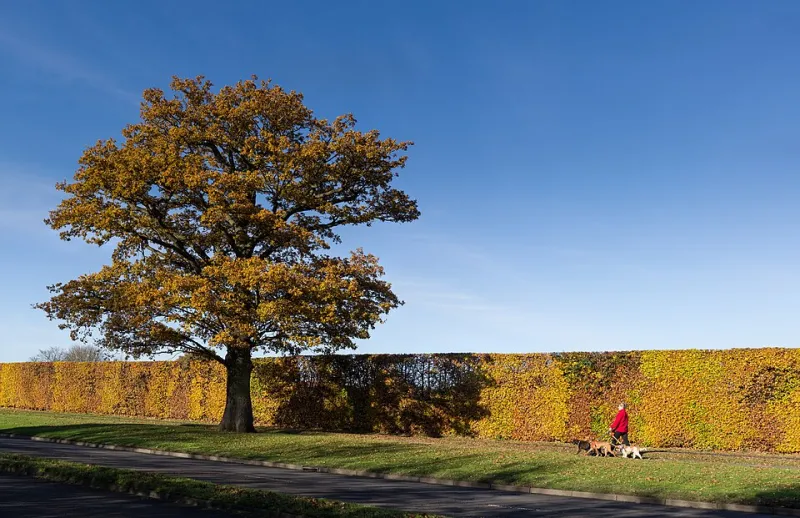
To keep it interesting, give each walk a tiny theme. Notice the houses with the best lights, the trees still holding their leaves, the moon, the shop windows, the dogs being walked. A micro-adventure does not need drama. It needs attention.
Track it without turning it into a fitness target
This is where many small habits die: they get measured to death. The moment the walk becomes a pace target, a calorie count or a ring to close, it starts to feel like another job. Keep the tracking deliberately modest.
A paper calendar with a tick is plenty. Or a note on your phone with the date and one word for how you felt afterwards: brighter, calmer, soggy, glad. Aim for something like 20 walks across the month rather than a perfect streak. If you miss two evenings in a row, make the next one five minutes long; the point is to restart, not to catch up. If you want a rule, use this: no pace, no distance, no guilt. The only number that matters is whether you got out.
When the weather is genuinely grim
There will be nights when the rain is horizontal and the sensible thing is to stay in. Fine. Put the walk in the diary for the next evening and keep the kit by the door. If you only manage a two-minute stand outside, that still breaks the spell. The habit is not a punishment; it is a small invitation.
By the end of November, the mile may not feel like much. That is the point. It is small enough to repeat, and repeatable habits are the ones that change an evening. One mile, before dinner, from your own front door. The sofa will still be there when you get back.