One Pin, One Postcode: The Weekly Ten Minutes That Make a Town Feel Like Yours
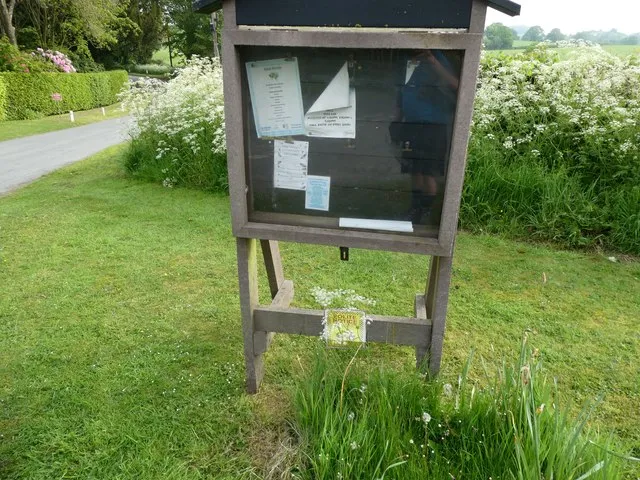
Photo: Jeremy Bolwell , CC BY-SA 2.0, via Wikimedia Commons
There's a particular kind of November shrinking that has nothing to do with the clocks. It's the shrinking of your map. In September you'd wander; by mid-November you're doing the same triangle — front door, corner, shop, home — and the town beyond it starts to feel like a rumour. Dark by half four, drizzle on the windows, and suddenly your whole world is four streets and a phone.
The habit below is an attempt to push the edges back out. It costs ten minutes a week, requires no app, no membership and no small talk. It's just a walk with a destination that isn't a shop till.
Why a noticeboard, of all things
Because it's the last unglamorous public thing we have. Parish council minutes. A lost cat. Beginners' yoga in the church hall, Thursdays, £6. Somebody's dad's 70th. A laminated warning about the bin collection moving.
None of that is exciting. That's rather the point. A noticeboard, a shop window, a library foyer, the Perspex case by the bus shelter — these are places where a place talks to itself. Reading them is a low-stakes way of being part of the conversation without having to say anything.
And here's the thing that actually matters for mood: winter isolation rarely comes from being alone. It comes from feeling unplaced. You can be surrounded by people on a Northern Line carriage at 8am and feel like a ghost. Belonging is a small, repeated practice — noticing, being noticed, knowing what's on — and it builds much faster when you give it somewhere to happen.
The rules, such as they are
Three of them. Keep it tight.
One board a week. Not five. One. Pick a different one each week if you like, or return to the same one. Consistency does the heavy lifting over time.
Notice one thing. Not sign up to one thing. Notice. Read the whole board, pick the single item that catches you — the thing you'd mention to someone if they asked what you'd been up to — and carry it home. That's it. You're done.
Ten minutes, plus the walk. If it takes longer, you've started volunteering, which is lovely but is not this.
That's the whole method. No journal required, though a note in your phone is fine if you're the sort of person who likes a record (you probably are, if you're here).
A four-week experiment
Give it four Saturdays — or Wednesdays, or whatever morning you're actually up and dressed. It works best in daylight, and in November that means before about three.
Week one: locate your boards. A short recce. Where are the actual noticeboards near you? The Co-op window, the church porch, the leisure centre corridor, the foyer of the library where the heating is free and the leaflets are plentiful. Walk past four and pick one to come back to.
Week two: read properly. Ten minutes. All of it. The small print at the bottom. Note which posters are old — a Christmas fair from 2023 still up tells you something about the board, and possibly about the person who pins things.
Week three: go somewhere you wouldn't have. Because of something you read. Not necessarily a group. Maybe just a different route home that takes you past the allotments, or the charity shop window displaying a knitted nativity in early December. The point is that the board has started voting on your movements.
Week four: say one sentence. To a person. The librarian. The person restocking the leaflet rack. A neighbour at the bin store. "Is the Thursday thing still on, do you know?" That's enough. You are now, technically, a local in the active sense rather than the postal sense.
At the end of four weeks, most people report two things: that the walk got easier to start, and that the town got bigger. Not dramatically. Just enough.
If you're in a city
Skip the village-hall romance. You have better raw material than you think. Library foyers, launderettes, the noticeboards in Co-op and Tesco Express, GP surgery waiting rooms, the wall by the bins in a housing estate, the newsagent window with its hand-written cards. Community gardens, parkrun posters, the A4 sheet for a tenants' association nobody has ever attended.
Narrow your radius instead. One postcode. Walk it like a patch. The city doesn't get smaller; your bit of it gets sharper.
If you're somewhere with one bus a day
You have the opposite problem — fewer boards, longer distances — and honestly, the habit adapts well. The village hall, the church, the pub, the Post Office counter, the gate of the primary school. Rural belonging tends to run on the same three boards for years, which makes it slower and also strangely deeper. You'll start recognising handwriting.
If it's dark and wet, drive. Nobody's marking you down for it. The habit is noticing, not mileage.
What this isn't
It isn't a networking strategy. It isn't a route to joining eight things by January and burning out by February. It's not even really about clubs.
It's an antidote to the assumption that because you're tired and it's dark at four o'clock, the world has quietly narrowed to your kitchen. It hasn't. There's a quiz night and a repair café and a woman in the next street teaching chair-based exercise to people twice your age, and it's all pinned to a board nine minutes from your front door.
You don't have to go. You just have to know it's there. That's what makes a place feel like yours — not attendance, but awareness.
Small print for week one
Take a torch. Wear the coat with the hood. Go while it's light. And when you get home, put the kettle on, which we've long held is the most underrated part of any habit.
Then next week, do it again. One pin. One postcode. Ten minutes.