A Hot Cup With Legs: The Lunchtime Loop That Resets a Flat November Afternoon
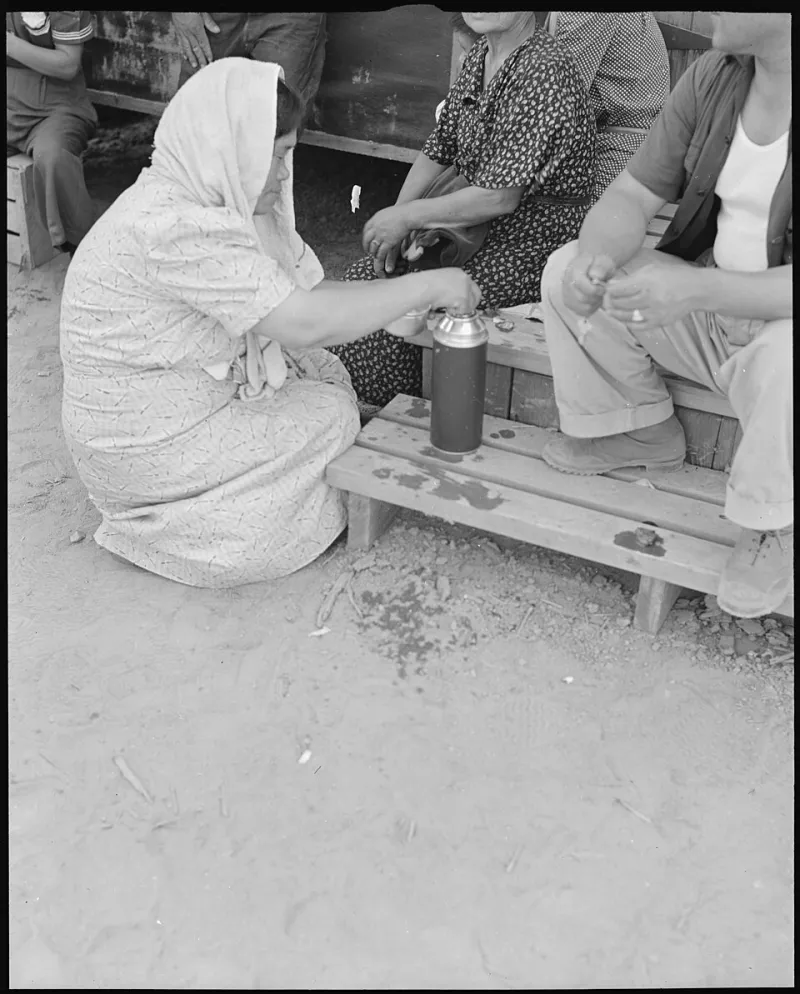
Photo: Clark, Fred, photographer, Photographer (NARA record: 8463820), Public domain, via Wikimedia Commons
At about ten past one on a grey November day, the office kitchen has a particular smell: reheated soup, wet coats, the faint hum of the fridge. You have forty minutes. The temptation is to eat at the desk, answer three emails, and let the afternoon go flat before it has properly started.
This is not an argument for a lunchtime workout. It is an argument for a flask, a coat, and a short loop you can do without thinking.
The flask is the handrail, not the reward
Fill a flask with tea, coffee, or soup before you sit down to eat. The point is not nutrition heroics. The point is that warmth in your hands gives your body a small, physical reason to be outside. It gives your hands something to do. It turns a vague thought - I should get some air - into a specific action with a beginning and an end.
When the flask starts to cool, you have probably been out long enough. That is the whole trick. You are not relying on willpower or a sudden burst of enthusiasm for wellness. You are relying on a cup that stays warm for roughly the length of a short walk.
Fifteen minutes, door to door
Choose a loop that takes seven or eight minutes in each direction. It does not need to be scenic. A side street, a rec ground, a canal towpath, the edge of a retail park, or even a covered shopping centre on a properly grim day will do. The route should be boring enough that you do not have to plan it and familiar enough that you could walk it in the rain with your eyes half shut.
Leave from the same door each time. Put your shoes and coat where you can see them. Fill the flask before lunch, not after, so the decision is already made. Eat before you go or when you get back - either works. The walk is the reset, not the meal.
No changing into gym kit. No driving to a park. No pace targets. If you are walking with a colleague, fine. If you are walking alone, also fine. The only rule is that you leave the building and come back fifteen minutes later.
Why this beats a heroic gym plan
Grey daylight still counts. It is not the same as summer sun, but it is brighter than the average office ceiling and it arrives at a useful time of day. Add a bit of gentle movement and you have interrupted the long stretch of sitting that makes the afternoon feel heavy.
The gym is a good thing. It is also a heavy thing to organise on a Tuesday in November. There is kit, travel, changing, and the small psychological cost of deciding to do something ambitious when you are already cold and a bit flat. A lunchtime loop has almost no activation energy. That is why it can become a habit when a bigger plan quietly falls apart.
This is the small-habits principle in practice: make the useful thing easier to start than the unhelpful thing. If the choice is between a fifteen-minute walk with a warm flask and another scroll at the desk, the walk needs to be the path of least resistance.
Making it stick on grim days
Use the same route for a week. Repetition removes decisions, and decisions are what kill lunchtime habits.
Keep the flask by the kettle or in your bag the night before. A visible flask is a small prompt. A flask at the back of a cupboard is just an object.
Go before you open your phone after eating. Even two minutes of scrolling can turn a forty-minute break into ten minutes of panic.
Have a bad-weather version. A shorter loop, a covered high street, or a walk to the far end of the building and back is better than an all-or-nothing rule that collapses in drizzle. The habit is leaving, not covering a set distance.
Do not turn it into a performance. No pace tracking, no distance goals, no comparing your loop with someone else's lunchtime run. The point is to come back with a slightly less flat head.
What to notice on the way round
Try to catch three things: the temperature on your face, one sound, and one colour. That is not mindfulness jargon for the sake of it. It is a way to stop the walk becoming another thing you do while mentally rehearsing your afternoon.
You might notice your shoulders drop after the first few minutes. You might notice that the sky is not actually one flat grey but three or four different greys. You might notice the same dog walker, the same van, the same window display. Familiarity is part of the comfort. The loop does not need to be exciting to be useful.
The return is the point
Come back in, take off your coat, refill your water, and sit down. The afternoon may still be long. The emails will still be there. But it will not be identical to the afternoon you would have had at your desk.
A fifteen-minute flask walk will not fix a difficult job or a dark month. It is not supposed to. It is a small, repeatable signal that the day has a bit of shape in it - and that you are allowed to step outside the four walls before the light goes.
That is often enough to take the edge off a flat November afternoon. And unlike a January overhaul, it costs nothing and starts today.