Let the Kettle Do the Work: A Three-Minute Reset You Already Own
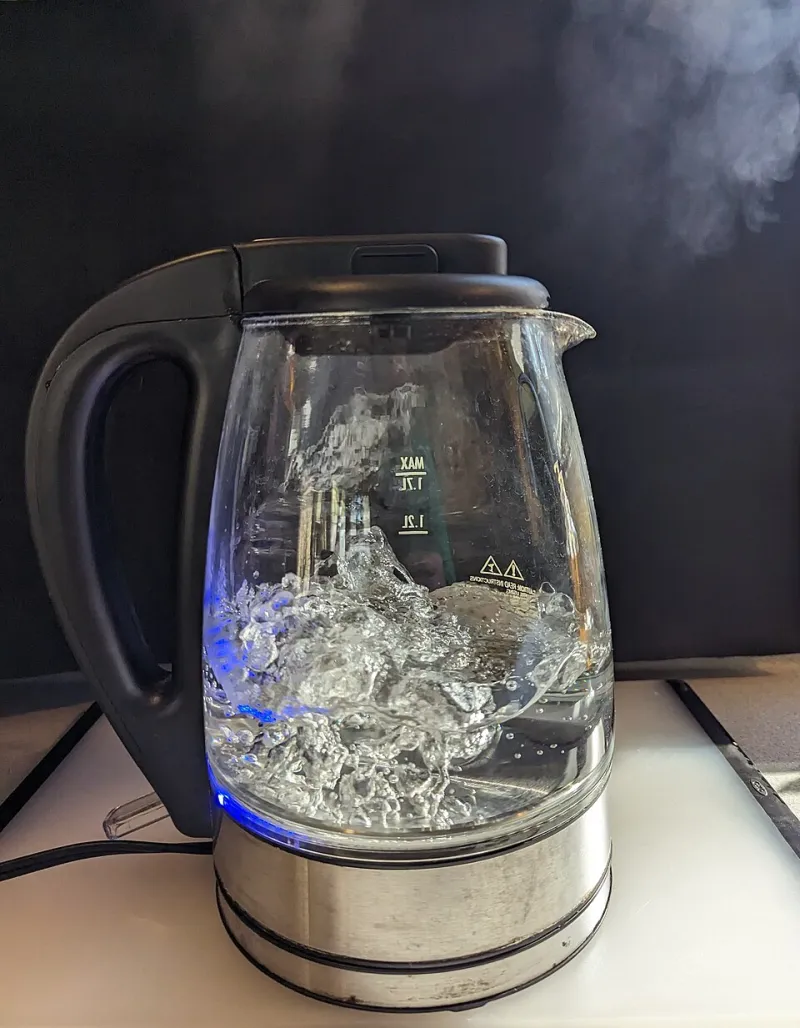
Photo: Plorpy2, CC BY-SA 4.0, via Wikimedia Commons
Most wellbeing advice asks you to add something: a journal, a walk, a breathing app, a five-step morning routine. By the time you have downloaded the app and found the charger, the moment has gone. The kettle, meanwhile, is already doing its thing.
The kettle pause is simple. You put the kettle on as you normally would. While it boils, you do not scroll, load the dishwasher, or start replying to messages. You use the three minutes — or however long your kettle takes — to check in with yourself, take a few slower breaths, and choose one small intention for the next part of the day. Then you make your tea and get on with it.
Why the kettle works as a habit anchor
Habit researchers talk about anchoring: attaching a new behaviour to something you already do. It is why flossing after brushing works better than flossing at some vague point in the evening. The kettle is a good anchor because it is regular, physical, and hard to ignore. It also has a natural beginning and end. The click. The steam. The pour. You do not have to remember to start; the kettle remembers for you.
There is a cultural bonus in the UK. Putting the kettle on is already shorthand for pause, comfort, and a reset. You are not introducing a foreign ritual; you are just paying attention to one you already have.
The three-minute shape
Keep it loose. This is not a performance. A simple shape is enough:
- Breathe once, properly. Not a big wellness sigh. Just let your shoulders drop and take one slower breath than usual.
- Notice what is actually there. Tired? Tense? Buzzing from a meeting? Fine. You do not have to fix it. You are just taking a reading.
- Choose one small intention. Not a life plan. Something like: I will eat my lunch away from my desk. I will send that one email before I open the next tab. I will go to bed at a reasonable hour tonight.
That is it. No app, no streak, no special mug. If you do nothing but stand still and breathe while the water heats, you have still done it.
Morning, midday, evening
Morning: set the tone
The first boil of the day is often the most rushed. Try using it to decide what kind of morning you are having, rather than letting the morning decide for you. Choose one thing you want to protect: breakfast sitting down, ten minutes before you check messages, or leaving the house on time without the usual scramble.
Midday: interrupt the build-up
By lunchtime, stress can gather quietly. The kettle pause works as a circuit breaker between tasks. While it boils, ask yourself what you need before you go back: a glass of water, an open window, a proper five-minute break, or simply a slower transition than jumping straight from one screen to the next.
Evening: close the loop
The evening boil is less about productivity and more about putting the day down. Choose one thing to leave for tomorrow and one thing to stop thinking about tonight. This is not a full life review. It is a small signal to your brain that the working day has finished, even if the dishes have not.
If you forget, or you are not a tea drinker
The kettle is optional; the pause is not. Coffee works. Hot water and lemon works. So does the wait for toast, the microwave, or the kettle at work. You could anchor the same pause to brushing your teeth or waiting for the bus. The kettle is just an easy place to start because most of us reach for it without thinking.
If you forget for a week, nothing is broken. This is not a habit with a streak to protect. It is a small door you can open again whenever you notice it.
The point is not the tea
The point is a small, repeatable moment of agency. In a day that often feels reactive — messages, deadlines, other people's priorities — three minutes of choosing your next step is not nothing. It is a tiny reset you already own.
Next time you reach for the kettle, reach for the pause too. The tea will taste better for it.