The Doormat Between You and Your Job: A Ten-Second Switch-Off for November Evenings
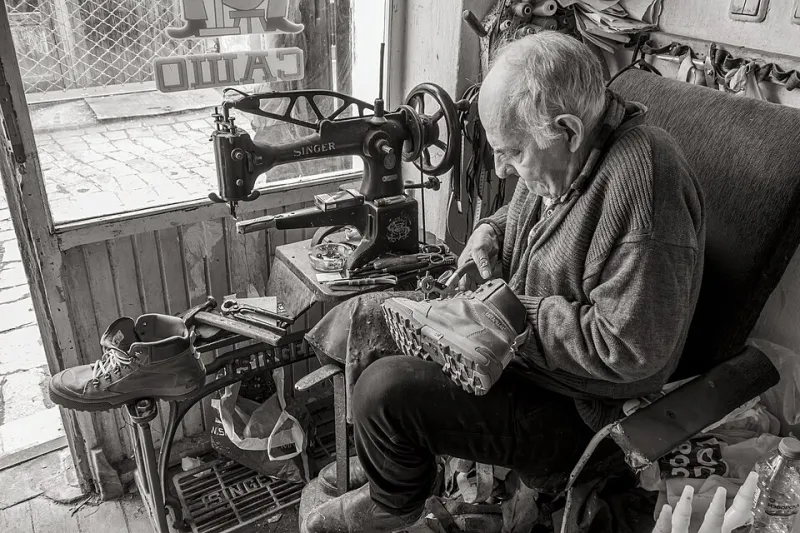
Photo: Petar Milošević, CC BY-SA 4.0, via Wikimedia Commons
By half four in November, the light has already packed up and gone home. If you work from home, the boundary between the office and the evening can be almost invisible. The laptop sits on the kitchen table. A tab with a half-written email stays open. You tell yourself you'll just check one thing after dinner, and suddenly it's nine o'clock and you're still mentally at your desk. The problem isn't that you're working too hard. It's that nothing has told your brain the day is over. A commute used to do that, even a grim one. Now the journey from desk to sofa is three steps and a sigh.
That's where a ten-second threshold ritual comes in. It's a tiny, repeatable action performed at the point where work ends and home begins. It doesn't require an app, a new habit tracker or a personality transplant. It just needs to be consistent, physical and short enough that you'll actually do it.
Why Your Brain Needs a Door (Even If You Don't Have One)
Psychologists talk about 'open loops'—unfinished tasks that keep tugging at your attention. When you close your laptop without any clear ending, your brain doesn't get the memo. It stays on standby, listening for the ping of an email or the mental list of things left undone. A commute provided a natural closing ceremony: the walk to the station, the train ride, the moment you put your key in the front door. It wasn't relaxing, but it was a transition. Working from home removes that transition entirely. The same room becomes office, living room and sometimes bedroom.
A threshold ritual works because it gives your brain a physical cue. It's not about magic. It's about context. If you always do the same small action at the end of the working day, that action becomes a signal. After a week or two, putting on your trainers or washing your hands can trigger a subtle shift: the work part of the day is closed. The evening part can begin.
Ten Seconds Is Not a Gimmick
Ten seconds sounds almost too small to matter. That's the point. Big rituals—a full workout, a long meditation, a complete kitchen clean—are easy to skip when you're tired and it's dark outside. A ten-second ritual is hard to argue with. You can do it while the kettle boils. You can do it before you check your phone. It's a low bar by design, because the habit needs to survive the days when you have no energy for habits.
The other reason it works is repetition. Your brain loves a predictable cue. If you perform the same action in the same spot every day, it starts to associate that spot with the transition. You're not relying on willpower. You're relying on geography and muscle memory.
Three Threshold Rituals That Cost Nothing
There's no single right ritual. The best one is the one you'll repeat without thinking. Here are three options that suit a home-working November.
The shoe swap
If you work in slippers or bare feet, try changing into proper shoes for the last ten seconds of your working day—or changing out of your 'work shoes' if you wear them. The physical sensation of different footwear is a simple, concrete signal. Some people keep a pair of trainers by the desk and put them on before their final email check, then take them off when they're done. It sounds daft. It also works, because your feet notice.
The laptop lid and drawer
Closing the laptop is not the same as putting it away. If your laptop lives on the kitchen table, the sight of it after dinner is a low-level reminder of work. A ten-second ritual could be: close the lid, unplug the charger, and place the laptop in a drawer or cupboard. Out of sight, out of the evening. If you can't put it away, drape a cloth over it or turn it to face the wall. The action is small, but it marks a clear end.
The soap-and-sigh
This one is especially good for anyone who feels grubby after a day of screen work. Go to the bathroom or kitchen sink. Wash your hands slowly for about ten seconds—really wash them, noticing the soap and the water temperature. Then take one deliberate breath out, a long sigh. That's it. The handwashing gives you a physical boundary; the sigh gives your nervous system a small reset. It's not a cure for stress, but it's a reliable full stop.
A Seven-Day Plan for Making It Stick
You don't need a complicated schedule. Pick one ritual and do it at the same time each day for a week. Here's how to make it feel less like homework.
Day 1: Choose your ritual. Decide exactly where and when you'll do it. 'When I close my laptop at 5:30, I will put it in the drawer.' Write it on a sticky note if that helps.
Day 2: Do it once. Don't worry about whether it feels meaningful. Just do the action.
Day 3: Anchor it to something you already do. Pair it with the last email check, the end of a call, or the moment you stand up from the desk.
Day 4: Notice what happens afterwards. Do you feel slightly less likely to check your inbox? That's the signal working.
Day 5: Keep it boring. The ritual should not become a performance. Same action, same place, ten seconds.
Day 6: If you forget, don't start a guilt spiral. Just do it the next day. Missing once doesn't break the habit; abandoning it does.
Day 7: Review. Does the ritual feel natural yet? If not, simplify it further. If it does, keep going. You can always add a second ritual later, but one is enough for now.
When It Doesn't Work
Sometimes a threshold ritual won't stick. Maybe you have urgent deadlines, a shared flat, or a job that genuinely doesn't stop at six. That's fine. The aim isn't to pretend work has no demands. It's to give yourself a fighting chance of noticing when the day has ended. If your ritual starts to feel like another task on your list, shrink it. Wash your hands for five seconds instead of ten. Put one shoe by the door. The smallest version is better than the perfect version you never do.
The Point Isn't Perfection
A threshold ritual is not a productivity hack. It won't make you finish work faster or love dark evenings. What it can do is create a small, reliable edge between the working day and the rest of your life. In November, when the light disappears early and the temptation to keep going is strong, that edge matters. Ten seconds won't change everything. But it might change the next ten minutes. And the ten minutes after that are yours.